How Antwerp is shaping the future of sustainable chemistry
An interview with Isabel Vermeulen and Annemie Bogaerts
Sustainable chemistry is a complex puzzle. But Antwerp is the place to solve it together.
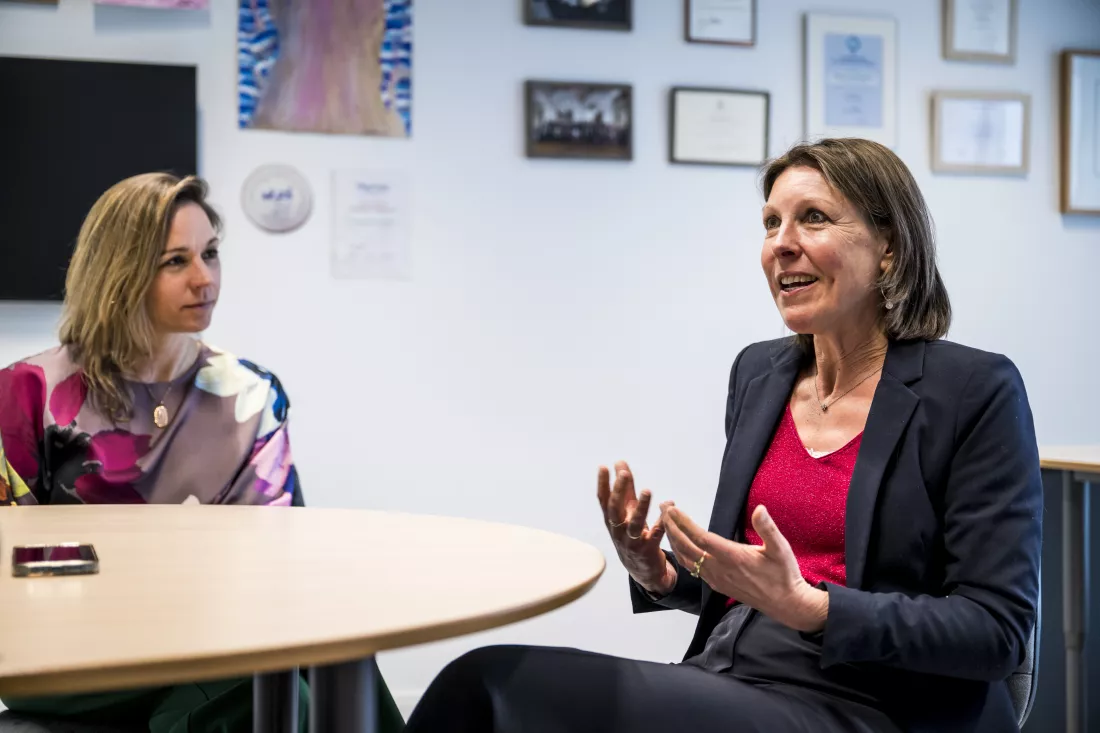
© Isabel Vermeulen/Annemie Bogaerts
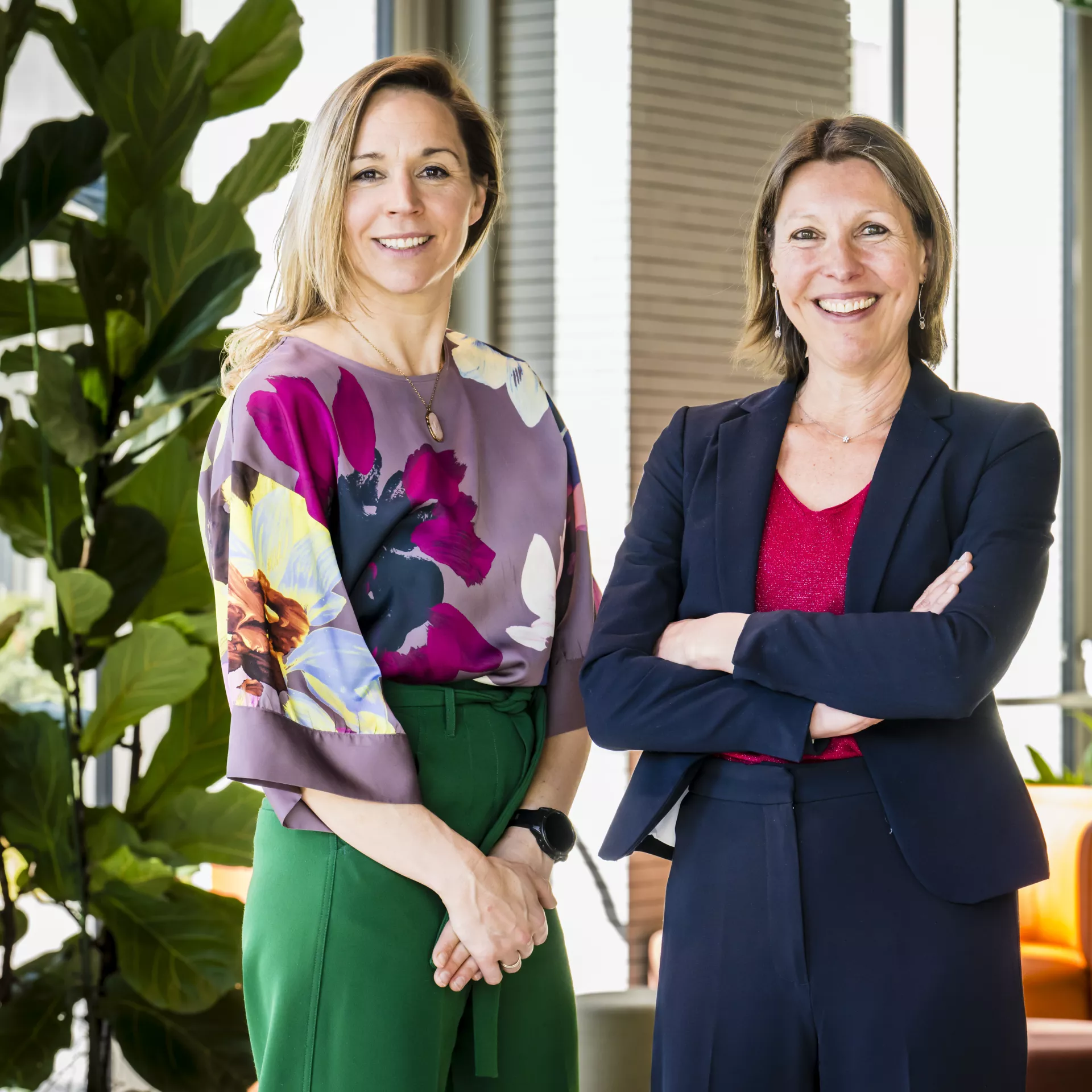
Annemie: “I head the PLASMANT research group (Plasma Lab for Applications in Sustainability and Medicine, Antwerp). Our research focuses on plasma chemistry with the aim of making processes in the chemical industry more environmentally friendly. This includes CO₂ conversion and methane valorisation for producing larger hydrocarbons and hydrogen. We combine fundamental research with practical applications, investigating how to valorise results from the Electrification Institute in BlueApp, among others."
Isabel: “I'm a chemical engineer with a PhD in industrial waste valorisation. I worked at Umicore for ten years, including at their internal recycling incubator, and at a consulting firm for four years. I recently became the general manager of the BlueChem chemistry incubator, where I can combine my technical background with my strategic experience."
Annemie, as well as being a researcher, you are also an entrepreneur at D-CRBN. How important is that to you?
Annemie: “Research is fascinating. But it only gets really interesting once you can put it into practice. Five years ago, Gill Scheltjens, David Ziegler, Georgi Trenchev and I started D-CRBN. We use plasma reactors to capture CO₂ from industrial processes and convert it into carbon monoxide, which we then use to produce new raw materials. We are currently scaling up. Sourcing sufficient funding remains a challenge, especially in these turbulent times for investors."
Isabel: “Annemie and I have met before during discussions around decarbonisation. I really value her work, but I also note that there is still a large gap between research and entrepreneurship. BlueChem helps to bridge this gap by providing facilities, support, and relief. However, market development must not be overlooked in this process — a strong idea is not enough; there must also be a market willing to adopt it."
Sustainable chemistry and climate technology are key to your work. Is that conviction a prerequisite for success?
Annemie: “Definitely. We are doing it for our planet. But there's more to it than that. New technologies, such as electrification, are absolutely necessary to keep the chemical industry in Antwerp."
Suppose a researcher has a solid idea for sustainable chemistry. What should they do first if they want to become an entrepreneur?
Annemie: “Start by building a network and find someone with good entrepreneurial knowledge to go through the process together. Researchers are passionate, but entrepreneurship requires a range of interests and skills."
Isabel: “Drive, passion and boldness are essential. At BlueChem, entrepreneurs find an environment in which they can collaborate with other start-ups and international companies, and receive support. Ideas are developed and there is a focus on how they can be brought to market. And, of course, we have labs where entrepreneurs can work independently. All the puzzle pieces are in place to create a great story."
How important is the chemical cluster in Antwerp today?
Isabel: “When I talk to start-ups and scale-ups, I notice that they always look for links to industry and the chemical cluster, which makes a lot of sense. Antwerp remains a leader in that area. Entrepreneurs can complete the entire innovation journey here, from research and start-up to scale-up and large company. This is unique in that it is possible at both technology readiness level (TRL) and market readiness level (MRL), because Antwerp offers the space, infrastructure and market. However, it's important to realise that it's a long-term endeavour with a frequently unpredictable course. But it's always fascinating!"
Annemie: “The Antwerp ecosystem offers enormous advantages. BlueApp and the Electrification Institute connect the university with start-ups, providing entrepreneurs with more research opportunities. Industry remains crucial, of course. I hope that large companies will find enough support to electrify their processes in the coming years. Installations often have a depreciation period of 10 to 20 years. They cannot be replaced just like that."
What motivates you to continue your work day after day?
Isabel: “No matter how brilliant your idea is, you can't do it alone. The entire ecosystem plays a role, from research institutions to large companies and other stakeholders. Add climate challenges and economic relevance to the mix, and you get a complex puzzle. But solving that puzzle is energising."
Annemie: “I have enormous faith in the potential of new technologies to address climate challenges and issues surrounding chemistry. It is this belief that drives me."
This summer, EuChemS, the largest chemistry conference in Europe, is coming to Antwerp. Will you be attending?
Annemie: “Of course. It's a chance to raise the profile of our plasma technology and find out what's happening in the industry. The fact that EuChemS is coming to Antwerp speaks volumes about our region's position as an international chemical hub. It is home to major players in the research and industrial sectors, as well as partners such as the Port of Antwerp-Bruges."
Isabel: “We're definitely going to highlight the BlueChem story. For example, we will be laying the foundation stone for our expansion at NextGen after the summer. I also want to share information about the BlueChem Kickstart Fund, through which the City of Antwerp provides financial support to start-ups to set up a shell lab at BlueChem, repaying 80% of the investment. The message is that you are not alone: Antwerp is home to a welcoming environment that embraces entrepreneurship. Supporting driven entrepreneurs makes me happy."
Annemie: “I feel the same passion for supporting my PhD students. Seeing those enthusiastic young people succeed gives me a lot of satisfaction and energy."
What do you do to clear your head?
Annemie: “I like to go for a run. I especially like going with friends, my research group or my children. We have participated as a family in the Kom op Tegen Kanker (Stand Up to Cancer) 100 km run for seven years. I always run 20 km."
Isabel: “I do triathlons, the full distance. 'A healthy mind in a healthy body' is my mantra. What is true of sustainable chemistry is also true of marathons and triathlons: it's a long journey, so it's best to start each day with enthusiasm."
Annemie: “Wow, it's great to hear that you're also so enthusiastic about sport!"
While chatting after the interview, we discover that the two women share not only a passion for sustainable chemistry and endurance sports, but also the fact that they both have three children. They laugh. 'That may explain why we have such a good understanding of long journeys.'