“Our innovation brings AI to the patient’s bedside.”
An interview with David Van Laere - Innocens
© David Van Laere
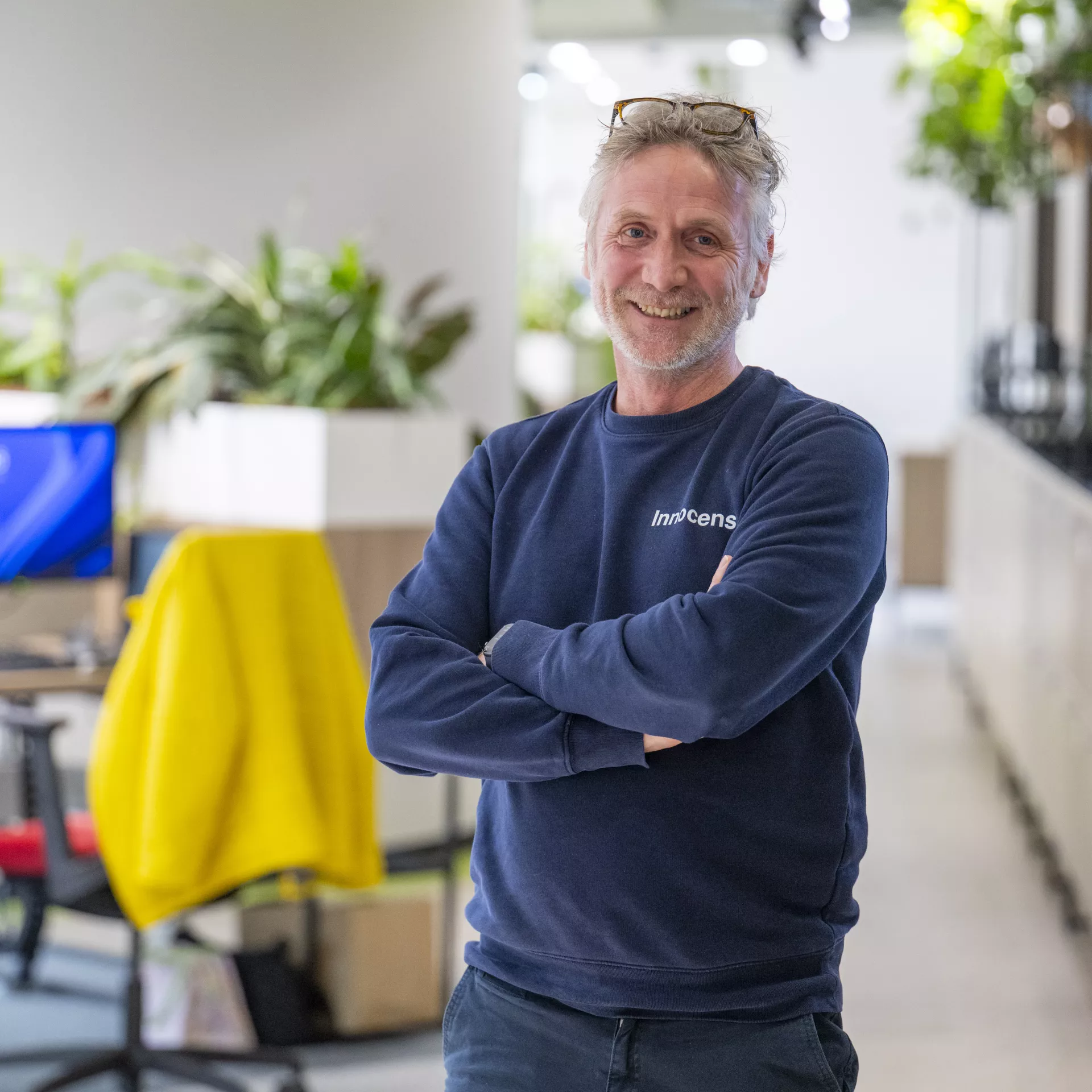
David, how did you evolve from doctor to health tech entrepreneur?
“After completing my training as a paediatrician at KU Leuven, my wife and I spent two years in Sydney, where I further specialised in neonatology, more specifically in cardiac conditions in premature babies. When we returned to Belgium, we chose Antwerp, a decision I have never regretted. I started working at UZA, coincidentally one of the first hospitals to digitise all patient data. I used that data for scientific research, but I wanted more. I wanted to make a tangible difference for patients.”
What did that mean in practice?
“I asked the former CEO of UZA for research time to build an infection prediction model on the hospital’s historical dataset of the department of Neonatology while simultaneously building technology that would allow us to compare real-time data with the model. This would allow us to use patient data proactively in a much smarter way and potentially detect conditions earlier. The hospital agreed, but first I had to secure the research funding myself. That happened quite by chance: the CEO of Bru Textiles in Kontich, where we are now based, had a child in the neonatal unit. We got talking, and he decided to provide financial support. I will always be grateful for that. My neighbour, who worked at IBM, also played a crucial role in the early steps of Innocens.”
What is your product?
“An AI software platform for hospitals. Applications run on top of that platform, and such an application can be compared to a digital co-pilot or a digital nurse. Every thirty minutes, our software scans all patient data: heart rate, oxygen saturation, perfusion, and more. Based on those parameters, the software generates a single, clear risk score between 0 and 1. At present, we do this for sepsis, an infection to which newborns are particularly vulnerable. The software also shows how the score is calculated, allowing physicians to incorporate it into their clinical assessment.”
“Our innovation supports doctors taking life-saving decisions with data-driven insights.”
How does this make a difference for hospitals?
“It improves situational awareness and enables clinicians to respond more quickly to early warning signals, which saves time. The longer you wait to administer antibiotics in cases of sepsis, the greater the risk of long-term disability or, unfortunately, death. That is my purpose: using data to support doctors and therefore impact care for patients. It is important to stress that the software does not make decisions; it only supports them.”
How do you regulate this technology?
“As soon as software is used to treat sepsis or another condition, it is classified as a medical device. That means it must comply with strict requirements, similar to those of a CT scanner. This is also why very little AI technology actually reaches the patient’s bedside. Translating software into a validated medical product is crucial. We have developed a toolbox that enables this. An additional advantage is that while we are currently applying this to sepsis, the technology can be deployed for virtually any clinical care pathway.”
Which hospitals do you work with?
“With hospitals in Antwerp, Brussels, Genk, Heidelberg, Amsterdam, Rotterdam, and Cincinnati in the United States. Each collaboration is in a different phase of validation. Through clinical studies, we aim to demonstrate both time savings and health outcomes. This evidence is essential to comply with European regulations. In parallel, we are looking for large, data-driven centres willing to act as early adopters. One important aspect is privacy compliance: all data remains with our clients.”
What is your business model?
“We are a strong advocate of a co-development business model bridging clinical domain expertise from hospitals with software development skills at Innocens. This allows the partners to build regulatory-compliant, effective AI applications. These applications can be used at the bedside to improve care while being upsold on our platform. A part of the generated revenue flows back into the clinical ecosystem, allowing them to fund more research and innovation. We work to convince hospitals that AI can become part of their business model. We already entered the market with our data platform, which in itself is not classified as a medical device. This data platform has certain AI capabilities, enabling fast execution and validating prototype models on real-world data at the bedside. Currently, most of those prototypes are only tested on offline historical data without meaningful clinical insights. We are currently building our strategic ecosystem while pursuing regulatory compliance.”
How did you discover the City of Antwerp’s support, and what did it mean for the project?
“Networking is vital as an entrepreneur. Through the University of Antwerp, I learned about the city’s innovation call. Initially, we had built our model for the very smallest patients. Thanks to the city’s support, we were able to expand it to all premature babies. The project was successfully completed and validated. We are very grateful for that support; it was exactly what we needed at that moment. Since then, we have completed two investment rounds and secured additional subsidies.”
How does entrepreneurship compare to working as a doctor?
“As a doctor, I experienced intense stress during the birth of premature babies, but I was able to disconnect afterwards. As an entrepreneur, the stress is constant. Innocens feels like my fourth child, and I often lie awake at night. But I am an idealist: I will keep fighting to make this work. 2026 must be our breakthrough year—the moment when approvals are in place, products reach the market, and we can develop new applications. The technology is infinitely scalable. Now the challenge is to realise that scale, for the benefit of doctors and their most vulnerable patients.”
- Name: David Van Laere
- Age: 48
- Company: Innocens
- Role: Founder & CEO
- How I clear my head: Cycling with friends and unwinding with my wife and our three children.
- Inspirational person: Gary Neiman, owner of Bru Textiles, a caring parent of a former preterm infant who remained a sparring partner throughout my journey and believed in Innocens and invested in it.